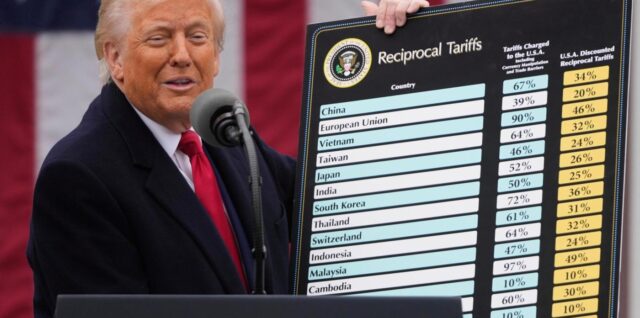
Crucial Trump Administration Tariff Alternative Takes Shape Amid Supreme Court Scrutiny
The post Crucial Trump Administraticom. In a dramatic development that could reshape international trade, the Trump administration is quietly preparing a significant tariff alternative as the Supreme Court examines the legality of existing global tariffs. This strategic move comes as at least six justices express skepticism about the current policy’s foundation. Why Is This Tariff Alternative So Critical? The administration’s proactive approach demonstrates the high stakes involved. According to Bloomberg sources, officials are developing contingency plans should the Supreme Court invalidate tariffs imposed under the International Emergency Economic Powers Act. This tariff alternative represents a crucial backup strategy that could maintain the administration’s trade objectives through different legal channels. What Prompted This Emergency Preparation? The urgency stems from concerning signals during Supreme Court hearings. Multiple justices questioned the legal basis of using emergency powers for broad trade measures. The administration’s response involves: Developing alternative legal frameworks Preparing implementation timelines Coordinating with international trade partners Assessing economic impact scenarios How Will This Tariff Alternative Affect Global Markets? Market analysts are closely watching this developing situation. A successful tariff alternative could provide stability, while any legal rejection might create temporary uncertainty. The administration’s preparation suggests they anticipate potential challenges to their current approach and want to ensure continuity in trade policy implementation. What Makes This Legal Challenge Different? Previous trade measures faced political opposition, but this Supreme Court review represents a fundamental legal test. The court’s skepticism centers on whether emergency powers can justify comprehensive tariffs. This makes the administration’s tariff alternative not just prudent but potentially essential for maintaining their trade agenda. Conclusion: Strategic Preparation Meets Legal Uncertainty The Trump administration’s development of a comprehensive tariff alternative showcases strategic foresight in the face of judicial scrutiny. While the Supreme Court’s final ruling remains uncertain, this preparation ensures the administration can adapt regardless of the outcome. This. Continue reading Crucial Trump Administration Tariff Alternative Takes Shape Amid Supreme Court Scrutiny

Trump’s team may have committed a major Supreme Court ‘blunder’: analysis

President Donald Trump and his legal team may have made a huge “strategic blunder” in defending the president’s “reciprocal tariffs” scheme at the Supreme Court this week, Adam Liptak wrote for The New York Times in an analysis published on Friday and it could have big implications for the outcome of the case. Trump imposed the tariffs months ago, bypassing congressional approval and causing enormous chaos in markets, and invoked as his authority the International Emergency Economic Powers Act (IEEPA) despite the fact that this law doesn’t even mention the word “tariffs.”The problem, Liptak argued, is that for months now, Trump has been bragging about how much money the tariffs will raise for the government, but “before the Supreme Court on Wednesday, his lawyer said something different. The tariffs were tools to achieve policy goals, said D. John Sauer, the solicitor general. ‘The fact that they raise revenue,’ he said, ‘is only incidental.’The difference was legally significant. If the Supreme Court finds that the tariffs are, at bottom, a kind of tax, it is likely to rule against them, since the Constitution gives Congress, not the president, the power to tax,” wrote Liptak. “If the justices agree that the tariffs are diplomatic tools, they may sustain them, as part of the president’s foreign policy prerogative.”In general, Liptak wrote, the justices don’t pay much attention to political statements made in public, but this time they might, and there’s a very significant reason why: “the disconnect at Wednesday’s argument was more complicated than in the earlier cases because, in an unusual move, the introduction to the government’s main brief quoted and so adopted some of Mr. Trump’s public statements. ‘One year ago,’ the brief said, quoting Mr.'”This means, he continued, that not only do the administration’s legal arguments contradict the president’s own words, they contradict themselves. Legal experts broadly think the oral argument in the tariff case went poorly for the president, with many of the right-wing justices skeptical that Trump has the ability to create tariffs out of thin air with no input from Congress. Continue reading Trump’s team may have committed a major Supreme Court ‘blunder’: analysis

Tariffs are Trump’s favorite foreign policy tool. The Supreme Court could change how he uses them

This week, the Supreme Court hears arguments on whether the Republican president has overstepped federal law with many of his tariffs. Continue reading Tariffs are Trump’s favorite foreign policy tool. The Supreme Court could change how he uses them