Thailand: Rights Priorities for New Government
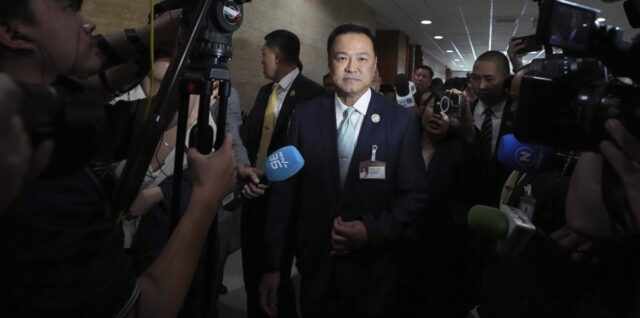
Click to expand Image Thai Prime Minister Anutin Charnvirakul after a press conference at Parliament in Bangkok, September 3, 2025. © 2025 Sakchai Lalit/AP Photo (Bangkok) The new Thai government should reverse the trend of past administrations and take concrete action to uphold human rights, Human Rights Watch said in a letter to Prime Minister Anutin Charnvirakul on November 12, 2025. Anutin took office on September 7 following a parliamentary election and royal endorsement.“The Anutin government should make human rights a priority and demonstrate a commitment through swift and effective action,” said Elaine Pearson, Asia director at Human Rights Watch. “The government should revoke abusive laws, end the repression of fundamental rights, and exonerate all those prosecuted for peacefully expressing their views.”Since the 2014 military coup, Thai authorities have imposed tight restrictions on viewpoints critical of the government and dissident opinions. They have prosecuted nearly 2, 000 people for exercising their rights to freedom of expression and peaceful public assembly. At least 284 people have been prosecuted on draconian lese majeste (insulting the monarchy) charges. The authorities have often held critics of the monarchy in pretrial detention for months without access to bail. The Thai government should reform the lese majeste law, adopt a moratorium on prosecution and pretrial detention under the current law, and ensure that any amnesty bill adopted by parliament includes amnesty for critics of the monarchy, Human Rights Watch said. The government should also immediately dismiss all pending Covid-19 restriction-related charges. The nationwide enforcement of emergency measures to control the spread of Covid-19 was lifted in October 2022, but at least 1, 469 people are still being prosecuted under the charges related to those measures. The killing and enforced disappearance of human rights defenders and other civil society activists remains a serious blot on Thailand’s human rights record. Cover-ups have effectively blocked efforts to pursue justice, even in high-profile cases, such as the ethnic Lahu activist Chaiyaphum Pa-sae, the ethnic Karen activist Porlajee Rakchongchareon, and the Muslim lawyer Somchai Neelapaijit. The authorities have failed to protect rights defenders from reprisals by government agencies and private companies using strategic lawsuits against public participation (known as SLAPPs). The Thai government should immediately curb the abuse of the judicial system to harass and punish critics and whistleblowers. In November, United Nations human rights experts expressed concerns about reports of death threats and online attacks against Senator Angkhana Neelapaijit, a former national human rights commissioner, and Human Rights Watch adviser Sunai Phasuk as a result of their comments regarding possible international humanitarian law violations in the recent Thailand-Cambodia border conflict. Prime Minister Anutin should enforce measures to end torture and enforced disappearance in line with the law on the Prevention and Suppression of Torture and Enforced Disappearance. Numerous allegations of police and military torture and other ill-treatment have gone unpunished. None of the outstanding cases of enforced disappearance have been resolved, including cases of nine exiled Thai dissidents who were abducted in neighboring countries during the previous government of Gen. Prayut Chan-ocha. The UN Working Group on Enforced or Involuntary Disappearances has raised concerns about enforced disappearances in the context of transfers of dissidents between Thailand and neighboring countries. Thai authorities in recent years have violated the international prohibition against refoulement, that is returning refugees and asylum seekers to countries where they are likely to face persecution, torture or other serious ill-treatment, or a threat to life. Thai authorities have forcibly returned asylum seekers and refugees from Bahrain, Cambodia, China, Laos, Malaysia, Myanmar, Turkey, Vietnam, and other countries. This inhumane practice undermines Thailand’s reputation as a safe haven for people fleeing war and persecution. In February, the government of then-Prime Minister Paetongtarn Shinawatra sent 40 Uyghur men to China, where they could face torture, arbitrary detention, and long-term imprisonment. After the murder of a former Cambodian opposition parliament member, Lim Kinya, in Bangkok in January, many critics of the Cambodian government living in Thailand have expressed concern for their safety. The Thai government should be commended for a new policy that went into effect on October 1 allowing Myanmar refugees in camps along the Thai-Myanmar border to work legally. The Thai government should introduce a protection framework for more recent arrivals from Myanmar, whether they are in border areas or elsewhere in Thailand.“Prime Minister Anutin has a chance to chart a new path for Thailand by ending ongoing human rights abuses,” Pearson said. “The new Thai government should quickly adopt a clear plan to address human rights issues and implement it.”. Continue reading Thailand: Rights Priorities for New Government

China: Dubious Criminal Investigation of Taiwanese Legislator

Click to expand Image Puma Shen, co-founder of Kuma Academy, during a media event of Kuma Academy in Taipei, Taiwan, June 2, 2023. © 2023 AP/Chiang Ying-ying who was living in China, to nine years in prison for his previous political activities in Taiwan. Yang’s was the first known case in which Chinese authorities have charged a Taiwanese national with “separatism,” under article 103 of China’s Criminal Law. In February, a Chinese court secretly sentenced the Taiwan publisher Li Yanhe (李延賀), known by his pen name Fu Cha (富察), to three years in prison on charges of “inciting secession,” for publishing books in Taiwan. Li had gone to China for a visit. These prosecutions appear to be part of a Chinese government strategy to extend its legal system beyond China’s borders to advance the foreign policy interests of the Chinese Communist Party, Human Rights Watch said. In 2019, the Party vowed to “accelerate the construction of legal systems on the extraterritorial application of Chinese law.”“Rights-respecting governments should speak out on behalf of freedoms of expression and association in Taiwan that Beijing is increasingly threatening,” Wang said. “French President Emmanuel Macron and other leaders planning to visit Beijing should use the opportunity to publicly express concerns about Chinese government harassment of Puma Shen and other people in Taiwan.”. Continue reading China: Dubious Criminal Investigation of Taiwanese Legislator

Iran: Three Prisoners Dead after Denied Medical Care

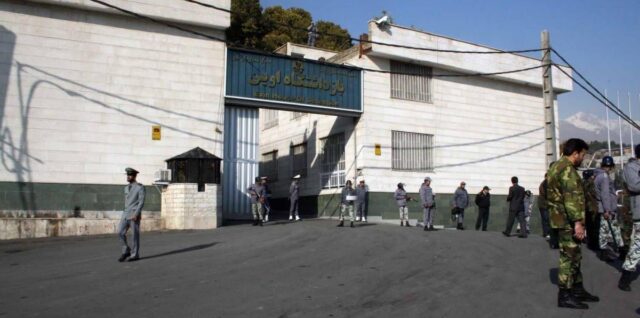
Click to expand Image Exterior view of Evin prison. © Wikipedia (Beirut) Three women died in Qarchak prison, a Tehran women’s prison notorious for abysmal conditions, between September 16 and 25, 2025, following a lack of medical care, Human Rights Watch said today. The deaths in custody of Soudabeh Asadi, Jamile Azizi, and 42-year-old political prisoner Somayeh Rashidi highlight Iranian authorities’ violation of prisoners’ right to life by causing or contributing to their deaths through denial of medical care. These cases point to the Iranian authorities’ long-standing policy of denying prisoners’ medical care and are a subset of the brutal treatment that puts Iranian prisoners’ lives at risk. “Prisons in Iran, especially Qarchak, have become places of torment and death where prisoners’ dignity and basic rights are systematically ignored,” said Michael Page, deputy Middle East director at Human Rights Watch. “For decades, the authorities have not only failed to improve conditions but have deliberately used the denial of even the most basic rights, such as access to medical care, as a tool of repression and punishment against prisoners.”The United Nations Standard Minimum Rules for the Treatment of Prisoners (the Mandela Rules) requires that states provide prisoners access to adequate medical care. Shahr-e Rey prison, known as Qarchak, is notorious for its inhumane conditions including poor hygiene, severe overcrowding, and inadequate access to basic facilities and medical care. Circumstances are so dire that many prisoners have gone on hunger strikes in protest. Qarchak has become a stark symbol of the Iranian government’s continued violation of prisoners’ human rights. For years, human rights organizations, activists, and UN experts and bodies have raised concerns about the prison’s conditions and authorities’ denial of medical care. In August 2025, Human Rights Watch again raised alarms about the dire situation of women political prisoners, including ailing detainees who had been transferred to Qarchak’s quarantine section after the June 23 Israeli attack on Evin prison. Among those transferred in June was Rashidi, who was arrested in April 2025 for writing protest slogans in Tehran, according to Human Rights Activists in Iran (HRANA), a US-based human rights group. Rashidi died in a hospital on September 25, ten days after she was taken to Mofatteh Hospital in Varamin following a seizure in prison, HRANA reported. On September 25, the judiciary’s official news agency, Mizan, confirmed the death of a prisoner identified as “S. R.”Doctors identified Rashidi’s delayed hospitalization as the primary cause of her irreversible decline, an informed source told HRANA. While she was in prison, Rashidi was sometimes unable to walk or care for herself due to her health problems, according to HRANA. Despite the fact that judicial and prison authorities and medical staff were all aware of Rashidi’s condition, authorities denied her timely and adequate medical care, providing her with sedatives and psychiatric drugs that worsened her symptoms, according to HRANA. Prison administrators even accused Rashidi of faking illness when she became so sick that other prisoners had to carry her to the clinic on September 15, sources told Human Rights Watch. Consistent with authorities’ long-standing patterns of denial, distortion, and evading responsibility, within several days after Rashidi’s death, the judiciary claimed that she had a history of drug use and neurological disorders and received appropriate treatment in prison. Rashidi’s death in custody came in the wake of two other women prisoners’ deaths. According to HRANA, Asadi, who was held in Qarchak on financial charges, died on September 16 after authorities denied her medical care and delayed her transfer to a hospital. On September 19, Azizi, who was detained on charges unknown to Human Rights Watch, was taken to the prison clinic with heart attack symptoms. After examining her, doctors told her there was nothing wrong and that she should return to the prison ward where she died shortly thereafter, a source told HRANA. A woman human rights defender who was formerly held in Qarchak told Human Rights Watch that prison clinic officials sent her back to the prison ward without running any tests despite excruciating chest pain and intentionally delayed her transfer to an external hospital even though her condition was worsening. “They [authorities] expose us all [prisoners] to death,” she said. The three women’s deaths are the latest in a long-standing documented policy of authorities denying prisoners access to healthcare, sometimes to punish and silence dissent. In an April 2022 report, Amnesty International detailed the circumstances surrounding the deaths in custody of dozens of men and women in 30 prisons across the country since 2010 as a result of denial of medical care. Many cases of denial of medical care and deaths in custody-in particular, prisoners detained for ordinary offenses and those from marginalized communities-goes unreported. Well-founded fears of reprisals by the authorities also severely hinder many families’ attempts to advocate for their loved ones. On October 9, authorities transferred women political prisoners from Qarchak prison to Ward Six of Evin prison. Activists and human rights organizations have reported that they are held in poor conditions without access to basic necessities. The situation of prisoners returned to Evin prison is concerning given that Israel’s June 23 airstrikes resulted in extensive damage to vital facilities there, including the clinic and visitation hall. Authorities continue to deny political prisoners in both Qarchak and Evin prisons access to adequate medical care. Sources told Human Rights Watch that Maryam Akbari Monfared, 48, has not been taken to an external facility to receive necessary back and spinal surgery and specialized treatment, without which she is at risk of paralysis. Despite transferring women political prisoners to Evin prison, authorities have continued to hold Akbari Monfared in Qarchak prison in an apparent attempt to punish her. Akbari Monfared has been imprisoned for 15 years on the vaguely worded charge of “enmity against God” (moharebeh) without a single day of leave. Warisha Moradi, a Kurdish activist on death row in Evin prison, also requires urgent medical care for several medical conditions, a source told Human Rights Watch. Scores of other ailing prisoners, including women political prisoners such as Zeynab Jalalian, a Kurdish activist, remain deprived of medical care in prisons across the country. Under international law, states have an obligation to carry out independent, impartial, transparent, effective, and thorough investigations into potentially unlawful deaths, including those occurring in custody. Consistent with historical patterns of impunity, Iran’s authorities have systematically failed to conduct such investigations into cases of deaths in custody, including those of prisoners. In many cases, they have simply denied allegations of intentionally depriving prisoners adequate medical care, sometimes within hours after the death, or blamed them on “suicides” or substance abuse. Iran’s authorities must immediately provide timely and adequate medical care, including specialized treatment outside of prisons, to all prisoners, Human Rights Watch said. “The international community should apply unwavering pressure on Iran’s authorities so they address the dire conditions prisoners endure throughout the country, including in Qarchak, and ensure proper medical care for all detainees,” Page said. Continue reading Iran: Three Prisoners Dead after Denied Medical Care