


Iranian Strikes Hit Two Communities Near Israel’s Nuclear Research Center, Injuring Dozens
In a significant escalation of the ongoing conflict that began three weeks ago, Iranian missile strikes have targeted two communities near Israel’s main nuclear research center. The attacks, which hit the southern Israeli cities of Dimona and Arad, left at least 90 people injured and marked the first time Israel’s nuclear research center has come under direct fire during the war.
### Details of the Strikes
The strikes occurred just hours after an airstrike targeted Iran’s Natanz nuclear enrichment facility. Although Israel’s military has denied responsibility for that attack, Tehran blamed Israel for the damage. In response, Iranian missiles were launched at Israel’s Negev desert towns.
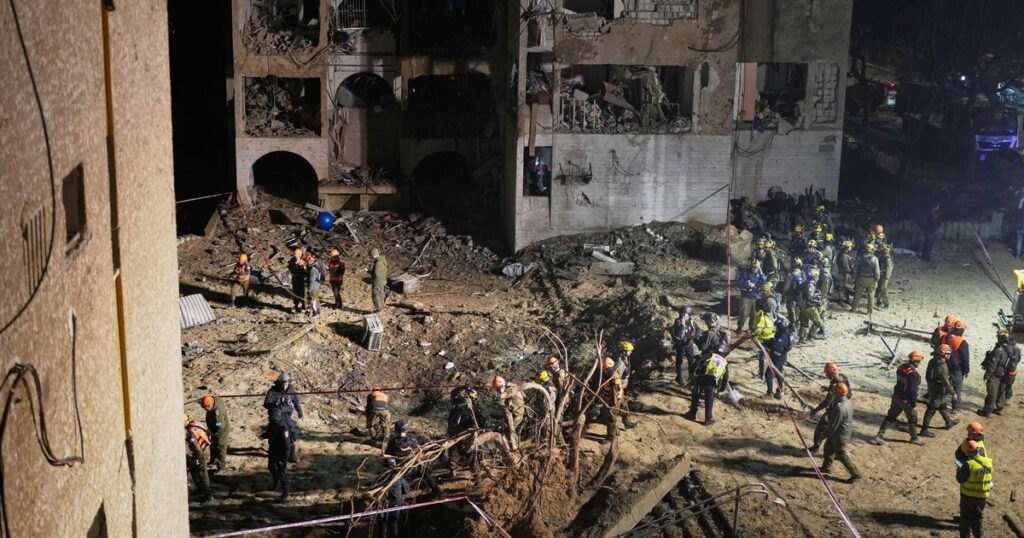
According to Israel’s Magen David Adom emergency rescue agency, at least 59 people were injured in the attack on Arad early Sunday morning. Of those, six were reported in serious condition, 13 in moderate condition, and 40 with mild injuries. Rescue teams continue to search rubble for additional casualties.
In a separate strike on the nearby town of Dimona, at least 33 people were injured. The area surrounding Dimona is home to Israel’s primary nuclear research center and is one of the largest towns in the sparsely populated Negev desert.
### Impact and Damage
Footage released by Israel’s emergency services showcased a large crater adjacent to apartment buildings with significant structural damage, including outer walls sheared away. The missile struck an open area but caused widespread damage to at least 10 apartment buildings, three of which were severely damaged and considered at risk of collapse.
Despite the impact, the International Atomic Energy Agency (IAEA) reported no abnormal radiation levels from the Israeli nuclear center. The agency also confirmed it had not received any reports of damage to the facility.
### Responses from Israeli Leadership
Israeli Prime Minister Benjamin Netanyahu addressed the attacks in a social media statement, calling the evening “very difficult” but affirming the country’s resolve to continue military operations. Netanyahu noted he had spoken with the mayor of Arad and expressed prayers for the injured.
“We are determined to continue to strike our enemies on all fronts,” Netanyahu declared, emphasizing Israel’s commitment to its defense.
The Israel Defense Forces (IDF) spokesperson, Lt. Col. Nadav Shosh, condemned the Iranian strikes, labeling them reckless attacks that highlight the Iranian regime’s instability and disregard for human life while targeting civilians.
### Iran’s Nuclear Facility Struck Again
Earlier the same day, Iran’s Natanz nuclear enrichment facility was hit by an airstrike. While Israel denied responsibility for that attack, Iranian state news agency Mizan reported no leakage or significant damage.
The Natanz facility, located approximately 135 miles southeast of Tehran, has been targeted multiple times in recent months, including during the 12-day Iran-Israel conflict in June 2025 and subsequent U.S. strikes.
The IAEA is currently investigating the latest airstrike on Natanz but stated there has been no increase in off-site radiation levels reported.
### Broader Context and Reactions
Iran’s Parliament Speaker Mohammad Bagher Ghalibaf commented on the missile strikes targeting Israel’s Dimona area, noting that if Israel is unable to intercept missiles in this heavily protected region, it signals a new operational phase in the conflict.
Israel remains unique in the Middle East as the only nation believed to possess nuclear weapons, although its government maintains a policy of ambiguity and neither confirms nor denies their existence.
As the conflict continues to evolve, the recent missile strikes mark a dangerous escalation, with Iran directly targeting areas near Israel’s strategic nuclear facilities for the first time, raising international concerns about the conflict’s potential to spiral further.
—
*This article will be updated as more information becomes available.*
https://www.cbsnews.com/news/iranian-strikes-southern-israel-arad-dimona/