


[This story contains MAJOR spoilers from the series finale of Stranger Things 5.]
Matt and Ross Duffer have always known what the final shot of *Stranger Things* would be, and now viewers have been clued in on that epic ending. After five seasons, 10 years, and many escapades to the Upside Down, the mega-hit Netflix series has brought the story of *Stranger Things* to a close.
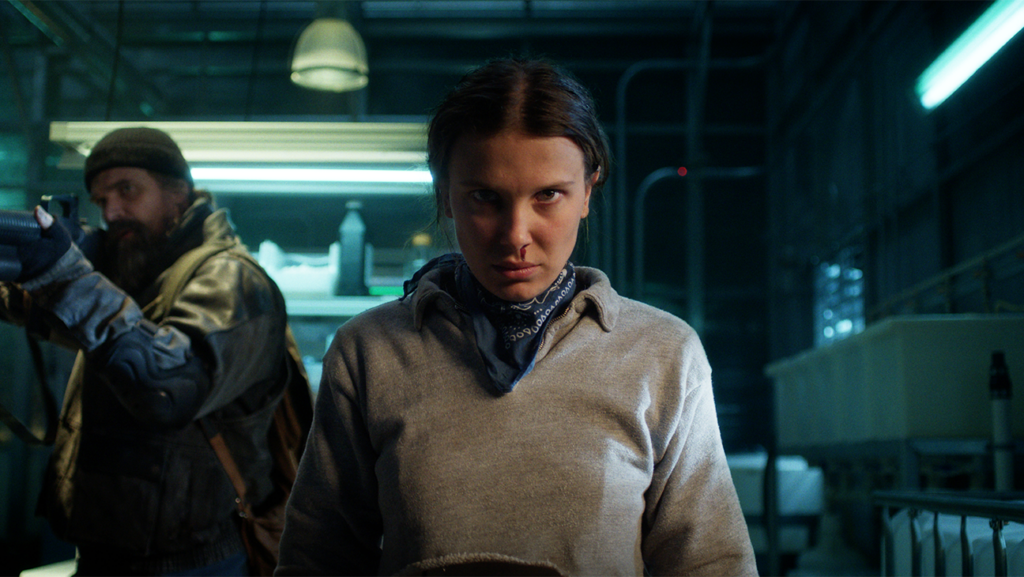
The Hawkins, Indiana, group of high schoolers defeated villain Vecna (Jamie Campbell Bower) against all odds, but it came at the massive price of Eleven (Millie Bobby Brown) sacrificing herself for the larger good of her friends and the world at large. Is Eleven really dead, or should the audience believe the story Mike (Finn Wolfhard) shared in the final scene of the series? The finale saw the original Hawkins group graduating and passing on Dungeons & Dragons—as well as, hopefully, a less traumatic teen era—to the next generation.
Read all their answers to our burning questions below.
—
**How do you feel about the reaction so far to the series finale, and the fact that you’ve now crashed Netflix twice?**
**Ross Duffer:** (Laughs) I’m surprised I didn’t ask them to increase the bandwidth more. I should have. We’re feeling really good. It was so fun because we went to the Americana [movie theater] in Glendale, California, last night and watched it with a bunch of fans. To see them responding to the show in real time was such an incredible experience and something we’ve never had before. We’ve done premieres, but of course, those aren’t filled with just fans of the show. So to see them react the way they did was such a great ending to the story for us.
**Was their most audible reaction what you thought it would be?**
**Matt Duffer:** Yeah, they reacted exactly where I wanted them to react. I don’t remember a moment where I was hoping for a reaction that we didn’t get one, and obviously, there was a lot of crying towards the end.
—
**You talked about always knowing that final scene, which was the last Dungeons & Dragons game with Mike looking down, shutting that door, and passing it all onto the younger kids. Can you elaborate on how you’ve always been working towards those final five minutes?**
**Ross Duffer:** Some of it did evolve as we were working on season five. The idea that we had forever was that we were going to have them playing one last game of Dungeons & Dragons. It’s kind of their last moment of childhood, reliving their childhood one more time. Then, one by one, having them leave the basement and Mike shutting the door on it and saying goodbye to childhood and moving on—that was the idea.
As we were working on season five, we added a couple things, one of which was Holly (Nell Fisher) and her friends. Holly and her friends were not initially going to be a part of season five. That was something we discovered as we were working, and we really fell in love with this passing of the torch. The idea of Mike looking down and realizing his sister and her friends are going to be able to experience the magic of childhood as he was. Hopefully just not as traumatically—although Holly’s already had a slightly traumatic childhood.
That’s why you see Mike smile at the end; it’s him remembering back to them as kids and knowing those memories are going to be with him forever. So while he is shutting the door on that phase of his life, it’s always going to be a part of him.
—
**What took the most time to get right as you were filming that final scene? Did everyone nail their last shot on the first take? Was everyone crying in real life?**
**Ross Duffer:** Yes. Everyone came in for that last day emotionally locked in. The only problem was that occasionally there would be too much crying, and we’re like, “We can’t be sad yet.” The honest truth is everyone was just so dialed in.
We originally were going to end the final shot of the show on just Mike shutting the door. Then Noah (Schnapp), the day before, came up to us and said, “Wouldn’t it be nice if the last shot was something that we were all in? So that we could all wrap together rather than wrapping one of us at a time.”
So the actual last shot we ever did was them from behind the bookcase, putting the D&D books away. Once we knew we had it, Matt and I told them this was going to be the last take, no matter what. That take is not in the episode because there’s too much crying.
**Matt Duffer:** It was a brilliant suggestion by Noah. I can’t imagine doing it any other way. But also, that’s not them acting. When they’re putting away their books and walking away, that’s them saying goodbye to the show. That’s the most emotional and heartbreaking shot we ever did on the show. That’s why you see Finn break the way that he did.
—
**You promised this would not be a Game of Thrones-level finale, but that the ending would be inevitable. Of course, it’s inevitable that Eleven would sacrifice herself to save everybody. What was the trickiest part about delivering something that you felt was so inevitable, but that also would be unpredictable, emotional, and a gut-punch surprise?**
**Ross Duffer:** It was definitely a challenge because we’d been building to this decision that Eleven was going to make, or have to make, for most of the season.
Even talking with the writers about her fate and what we wanted to happen, we tried to vocalize that in the episode because her decision was hard for us. That’s where we had Hopper’s (David Harbour) whole speech: the trauma of her childhood and all the pain she’s experienced, and that she deserves better than that.
These are all conversations we had with the writers, so hopefully it leads to this moment of, well, she can’t. Hopefully that still surprises people that she actually did that.
**Matt Duffer:** You have Hopper offering that point of view and Kali (Eleven’s sister) offering the opposite point of view, which was also something we talked a lot about in the room: How does this story actually end?
If Eleven’s still alive, then the question is, is there an in-between version of that? We settled on, could there be an in-between version? But is that real or not? We don’t know.
If we knew—or if Mike knew—then everybody’s at risk and her sacrifice doesn’t mean anything.
We came up with Eleven 10 years ago; we’ve been working with Millie for 10 years. So we’re very protective of her. It was really hard.
I know we get hit for not killing more people, but Ross and I love these characters and these actors so much. It just felt like such a courageous and brave thing for her to do. She’s preventing what happened to her.
What Hopper’s describing is all real, and it happened to her, and it happened to Kali. That’s why when Hopper’s giving that speech, you see how in pain she is and why Kali has become the way she’s become—because of what she went through as a child.
Eleven wants to make sure that doesn’t happen to any other kid.
When Kali shows her all those pregnant women, you’re seeing what they’re going to do: mass manufacture kids just like her using her blood. That’s what she wants to stop. She wants to give other kids an opportunity to have a life that’s not like hers.
—
**I know you’re leaving it open for interpretation, but with your conversations with Millie, are you all choosing to believe the group? They end by saying, “I believe.” So, are Matt and Ross and Millie saying, “I believe”?**
**Ross Duffer:** I don’t know if we want to say. Obviously, we’ve had these conversations with Millie too, and we all have our own interpretations. I worry if I say it might take away from the audience’s own experience. We really want the audience to take from it what they want.
**Matt Duffer:** You can’t write with a sense of ambiguity. You’re writing from a specific point of view because the character doesn’t know—Max (Sadie Sink) doesn’t know, right? The characters don’t know because they can’t know, and the audience can’t know. Otherwise, it puts Eleven in danger and her sacrifice was for nothing. So there’s a point in not knowing.
The boys obviously choose to believe. I’m not sure what the majority of people are thinking, but dipping my toes a little bit into social media, it seems like people are choosing to believe and are going the Mike Wheeler route. With Eleven maybe out there, and every character heading off onto this fresh start, it feels like you could always check in 10 years down the road.
—
**Have you guys ruled that out? Do you keep it in the back of your mind? Is the door open to maybe revisit this group when you’re done with the live-action and the animated spinoffs?**
**Matt Duffer:** We really don’t know. I mean, Mike is closing the basement door. We’re closing the door on the story. That’s one reason we had the closing credits the way that we did—because it was a way of saying: This is finite. This is the end of their story. It’s the end of the story of Mike and Eleven and Joyce (Winona Ryder) and Hopper.
So, no, there’s no plan or intention to tell the story further because it’s a coming-of-age story. Ultimately, that’s what it’s supposed to be; that’s what the show always was.
When he closes the door to the basement, he’s closing the door on his childhood and moving onto adulthood.
I mean, I guess a sequel could be about a midlife crisis—that just sounds really uninteresting! (Laughs.) Grandpa Hopper? I don’t know how that would read as anything but a gross cash grab to me.
I wish I could talk a little bit more about the spinoff, but I’m not allowed yet. But Ross and I are really excited about exploring new characters and a new mythology, still very much interested in telling a story in the spirit of *Stranger Things*. It feels like with this final season, we finished saying everything we wanted to say about these characters, their story, and the Upside Down.
—
**What have you guys been making of the reaction to the final season leading up to the series finale? Have things surprised you, especially how viewers have reacted?**
**Ross Duffer:** There’s always a lot of noise. Obviously, this was louder with Will’s coming-out scene, especially. But our main thing was: Do we believe in the scene? Was it important not just for Will, but for the story that we were telling, both thematically, from a character point of view, and narratively?
For us, we’re so proud of Noah. That was my main thing, checking with Noah and making sure how he was doing because it’s such a vulnerable performance. Noah felt great about it on the day, and he’s still so proud of it and thrilled that we did it.
**Matt Duffer:** At the end of the day, that’s what matters to us.
People are extremely passionate about the characters in the show. Ross and I have always said about the final season: in terms of making sure we don’t have any regrets, we put absolutely everything we had into the season—blood, sweat, and tears. We left everything on the field.
It’s like, “Why didn’t I take that trip to Palm Springs? Why didn’t I take that weekend off?” There’s none of that. We put everything we had into it, and I hope it resonated for the majority of fans.
—
**You gave us such an extended epilogue, which we don’t always get in series finales. Was there anyone’s future who changed a lot from what you initially thought, or that took the most time for you to land on?**
**Ross Duffer:** We talked about it with all the actors because they know their characters inside and out. We wanted to make sure they also felt good about where their characters ended up.
I think the scene that probably evolved the most was the rooftop scene with the teens, just because in the first draft, there was a little less clarity in terms of what people were doing and where they were in their lives.
We worked on it mostly on the day with the actors. There’s an even longer version than the one that aired—at least five minutes longer—which really helped bring specificity to their characters and exactly where they were in that moment. It was such an amazing experiment.
**Matt Duffer:** Broadly, as far as the finale is concerned, the most important thing for me and Ross was that obviously we needed it to work and feel really great to us, since we’ve been writing the show for 10 years.
But we also needed it to work and resonate with the actors because they’ve been living and breathing these characters better than anybody.
The fact that it did resonate as deeply and that they’re all as happy as they are means more to us than anything.
—
**You have *Tales*, the animated show, and the live-action spinoff. Is there anything else now that you can share about how the franchise continues next?**
**Matt Duffer:** I’ve been pinned down and forced to spill this already, so I might as well tell you. There are lingering questions about the rock and where the rock came from (in Henry’s story in the finale), the scientist, and all of that.
We had said that there is something in the finale that is going to connect to the spinoff. The spinoff is not about rocks or mining the rocks, but I would say that’s the loose end—that isn’t tied up—that will be tied up.
Ultimately, and we have said this before but I guess I’ll reiterate—it is an entirely new mythology.
This spinoff does connect and will answer some of those lingering questions. It’s not specifically about the Mind Flayer or the Upside Down, but hopefully it provides some answers at least to those questions related to Henry’s memory.
—
**Henry justified his beliefs in the end amid a hopeful finale. What should we take away from Vecna and Henry’s story? What do you hope viewers think about?**
[Note: The original text ends here before the creators respond directly to this question.]
https://www.hollywoodreporter.com/tv/tv-features/stranger-things-series-finale-eleven-fate-duffers-interview-1236462569/